A chef used Claude to build her Naira Life Conference deck and got dragged for it. Then people read what was actually on the slides.
Chef Imoteda Aladekomo aka 'Aunty Teda' did not expect to become a case study.
She had been booked to speak at Zikoko's Naira Life Conference; the personal finance and business event that has, over two editions, become one of the more credible stages in Nigeria for people to talk plainly about money. Her session was on running a food business: margins, pricing, the parts that are often (severely) overlooked. If you’ve ever heard of her restaurant, Fired and Iced in Lagos, Nigeria, you’d understand this session was as important as the air we breathe*
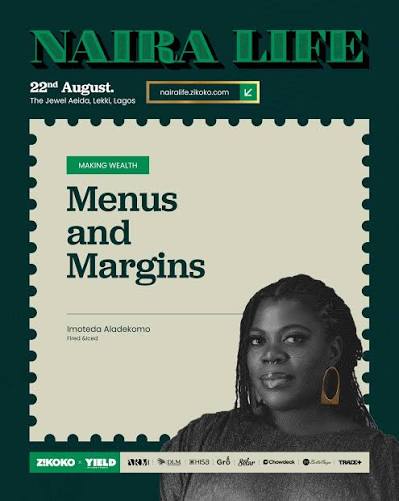
The night before, according to her own account, she had a full speech and no slides. So, (by her own description), a self-identified "technologically illiterate" chef with no design background, she pasted the entire script into Claude the next morning and asked it to generate a presentation she could speak alongside.
It worked. She used it. She went on stage. The problem was, after what should have been a great sesh, as the kids call it, some of the internet came for her.
*Fired & Iced is a highly popular barbecue and outdoor lounge located in Lagos. Chef Imoteda Aladekomo comes from top culinary pedigree, having been trained by Le Cordon Bleu. Having a respectable and successful restaurant in Nigeria is no small feat. If anyone wanted to learn the facts behind the business, this session would have been the Holy Grail.
Why People Can Now Spot an AI-Generated Slide Deck
News flash: audiences can now spot a Claude deck on sight.
The clean sans-serif titles. The generous whitespace. The particular way an AI tool defaults to laying out a stat block or a three-column comparison when you haven't told it otherwise. It has become, in the space of a few months, its own visual dialect; recognisable enough that when most folks saw Teda's slides, their reaction wasn't exactly surprise that she'd used AI. Rather, it was recognition. They'd seen the same aesthetic before, at other events, from other speakers, and said plainly that it's becoming a conference staple, adding a one-line verdict on why: the defaults are just that good.
That is not a small thing to be true. Good defaults are, in effect, a free design department. For years, the gap between "person who understands their business numbers cold" and "person who can turn those numbers into a professional-looking deck" was a real and often expensive one
The only way to close it in the past was by a) hiring a designer, b) learning PowerPoint properly, or c) simply looking a little rougher on stage than your content deserved. Generative tools have been quietly closing that gap all year, to the point that Anthropic's own presentation features have gone from a niche add-in to something rolled out to every paying subscriber. What used to separate a polished speaker from an unpolished one is no longer, reliably, a skill gap. It is a five-minute prompt.
Which is exactly why it's starting to raise eyebrows. If the visual layer is now free and instant for everyone, the subject has moved from "can this person make a good deck" to "does this person actually know what they're talking about”, all because [generative] AI is involved. Some of Teda's critics seem to have sensed that shift and didn't like where it left them. If AI slides are a conference staple now, the deck stops being proof of preparation. It just becomes wallpaper. The entire anti-stance seems to say: what's supposed to prove the preparation is what's written on it.
What Was Actually on Those Slides?
This is where Chef Imoteda’s story stops being a cautionary tale about AI and becomes something more interesting: a test of whether her content could survive the scrutiny her method invited.
Perhaps it would have sufficed if she simply shared the deck after the backlash. But a distinctive move she made was to also post her hand-typed speaking script alongside it. This was the “raw dump” she’d actually fed into Claude in the first place, and made a point that's easy to miss in the noise about using any AI-related tool. By her accounts, she had sat through enough masterclasses to know the difference between vague inspirational advice and actual information, and had been deliberate about bringing the latter. Real numbers from her own business. Real insight, not a motivational template. But it was still a problem.
The Scrutiny Problem
Right now, if you use AI for any part of a piece of work — even just the layer that used to require a designer, not the thinking — some people treat the whole output as suspect. Not "did this help you," but "does using it at all disqualify you." Chef Imoteda didn't ask Claude for her margin insight. She asked it to lay out a speech she'd already written, from years of numbers she already had. That's closer to hiring a formatter than outsourcing your expertise. But some of the reaction treated it like she'd faked the whole talk.
That distinction; between using a tool to aid something you already did and using a tool to replace the thing you were supposed to do, is exactly what keeps getting flattened whenever this argument shows up. A chef who spent twenty years learning exactly how a margin leaks doesn't stop knowing that because Claude formatted her bullet points. But you wouldn't know that from a lot of the pile-on.
What This Is Actually About
Strip away the specifics of one chef's slides, and the question underneath is old, wearing new clothes: who gets to look prepared, and what's that judgment actually based on?
For a long time, "looking prepared" at a professional event required a specific and unevenly distributed set of skills: design literacy, software fluency, sometimes literally the money to hire someone who has both. A chef with years of real operating data in her head and zero hours in design software was, until recently, at a structural disadvantage against a founder with a design co-founder or an in-house deck template. The content could be equally strong. The presentation of it never used to be equal.
Generative tools are collapsing that disadvantage, messily and in public. Whether that's a good thing depends entirely on what you think a conference talk is actually for. If it's partly a design showcase; proof that someone put real hours into the visual polish, then something about a same-morning Claude prompt does feel like it's skipping a step that used to matter. If it's a transfer of hard-won, specific knowledge from someone who has it to a room of people who need it, the deck was never the deliverable. The information was.
Both of those are reasonable positions to hold. Neither one is wrong, exactly. Chef Imoteda's session, going by the people who actually sat through it and by the script she was willing to post publicly afterward, seems to have delivered real information either way, which doesn't resolve the argument about method so much as it sits next to it, unbothered.
This piece draws on public posts and threads shared on X by the individuals quoted, in connection with Zikoko's Naira Life Conference
Related: How to Use Claude Cowork as a CEO or Founder in 2026: A Guide for African Business Leaders