For years, Chinese firms sold goods to Nigerian importers. Now some are opening warehouses that sell directly to the same market, and buying land to manufacture here. What does this mean for businesses caught in the middle?
For decades, the arrangement was simple. A trader in Onitsha, Lagos, or Aba would source goods from a supplier in China, ship them in by the container, and sell them on to Nigerian retailers and consumers. The margin sat with the Nigerian importer. China's side of the deal ended at the port.
That arrangement is changing, piece by piece, in a few different industries at once, and the change follows a pattern worth understanding if your business sits anywhere in that chain.
Accounts have been circulating in Nigerian trading circles that illustrate what this shift looks like on the ground. One such account, reportedly shared by an Onitsha-based industrialist, describes a trader who used to offload tens of containers of shovels, pans, and other building components from China every week; until one of his own Chinese suppliers, a woman he'd sourced from for years, opened her own retail warehouse in Asaba and began selling directly at lower prices. His import volumes reportedly dropped sharply and quickly.
Whether or not the specifics of that story check out, the shape of it; a supplier becoming a competitor almost overnight, is exactly what stage two of this pattern looks like when it happens to a real business. And it casts a troubling shadow to be wary of.
The Pattern: Import, Then Retail, Then Manufacture
There are currently roughly three stages of this new-ish development, and different sectors are at different points in the cycle.
Stage one is the status quo most Nigerian import businesses grew up on: Chinese manufacturers sell wholesale to Nigerian importers, who bring goods in and distribute them locally. This is still how most trade between the two countries works, and it's a real part of the economy; wholesale and retail trade is Nigeria's second-largest contributor to GDP after agriculture, and it's estimated to account for roughly a quarter of total employment in the country.
Stage two is Chinese sellers setting up their own retail or wholesale presence inside Nigeria — warehouses, showrooms, sometimes marketed through local influencers and content creators — selling directly to the same customers a Nigerian importer used to serve, at prices the importer often can't match once the shipping and middleman markup are removed.
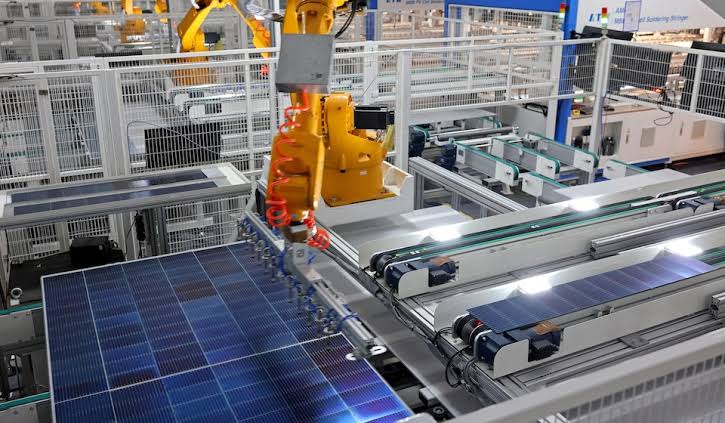
Stage three is manufacturing the goods here entirely, which is the point at which the shift stops being about pricing and starts being about who owns the industry going forward.
Nigeria is already well into stage three in several sectors, and the scale is documented, not speculative.
Where Stage Three Has Already Happened
Ogun State has been doing this longest. The Ogun-Guangdong Free Trade Zone was set up in 2007 as a joint venture between Ogun State and Guangdong Province, and by the mid-2010s it had dozens of registered Chinese-linked firms, including Goodwill Ceramics, Hewang Cardboard, and Snowsea Freezers, alongside independent operations like the Hong Kong-owned WEMPCO steel group. In 2025, Inner Galaxy Group announced a $400 million steel factory in Ewekoro, Ogun State, expected to employ around 6,500 people directly and indirectly once it's running.
Batteries and lithium tell a similar story, and it's directly relevant to the building-materials and hardware trade the diaspora conversation around this topic keeps coming back to. Kaduna State selected a Chinese firm, Ming Xin Mineral Separation, to build Nigeria's first lithium-processing plant, explicitly aimed at eventually producing EV batteries domestically. Nasarawa State has since commissioned what's described as the country's largest lithium processing plant, built by another Chinese firm, with more Chinese-backed lithium plants reportedly over 80% Chinese-funded. On the policy side, Nigeria's auto industry regulator has been publicly pushing local manufacturers to scale up production of batteries, brake pads, filters, and other components that have historically been imported and Nigerian firms like Ibeto Batteries are already part of that push.
Within the car battery import trade specifically, there's a further claim worth noting with the same caution: after Chinese-backed battery manufacturing set up inside Nigeria over the last five years, imports in that category fell by roughly 70%, by their own calculation. That figure hasn't been independently confirmed and shouldn't be treated as an official statistic; no national trade data on car battery imports specifically was available to check it against. But it's consistent with the documented direction of the sector: Nigerian battery manufacturing capacity has genuinely expanded over that period, and a national policy push exists specifically to displace battery imports with local production. Whether the real number is 70% or something smaller, the trend it's describing is real.