Ask most Nigerian professionals what the country's most underrated creative export is, and you'll hear Afrobeats, Nollywood, maybe fashion. It would probably be a cold day in Hell before anybody says comics. That gap (between how little attention this industry gets and how much money is actually moving through it) is exactly why I built TheACE, a media platform dedicated to documenting Africa's comic and animation industry from the inside.
Here's exactly how that happened. In March 2024, I was on the organising team for the second edition of Comic Con Ibadan (I came in as the branding lead, handling the visuals, creative assets, and everything on that side). We invited a few media organisations to cover it. One of them reported the event as children-themed.
Anybody who actually knows comic conventions knows that's not what these events are. You'll find people who've spent decades in the industry, studio owners, brand owners who've worked with international partners. Walls come down at these events; it's not bureaucratic; you get to network, see your favourite artist's work, buy it directly from them. For a media organisation to call that "children-themed" told me something was wrong, and it wasn't really about that one article.
I knew that there was a problem. So I went to Google and typed "comic books and animation in Africa", and the results were very, very poor.
I'm the kind of person who'll dig to page ten of a Google search if I have to. What I found were results from four, five years back. Barely anything from the last year, let alone the last few months. And when I looked at how the big international reports covered the industry, the pattern was the same everywhere: deep, detailed coverage of the Western, Japanese, and French comic spaces, and then Africa was lumped in with the Middle East as one line. "Africa and Middle East." That's it. That's the whole entry.
Sports has SuperSport, ESPN. Music has MTV, Soundcity. Every other form of entertainment has dedicated media covering it properly. Comics and animation in Africa didn’t. So I built one.
Before TheACE had its name, I actually wanted to build my own comic universe; the way Marvel has the MCU and DC has theirs. I was calling it the African Comic and Cinematic Universe. Then I found out a Sierra Leonean brand already had that name, and kids and teenagers there had already adopted it. By that point, I'd realised I wasn't trying to create comics or animation myself anymore — I was trying to build the media that covers the industry. So Universe became Empire. The African Comics and Cinematic Empire. TheACE.
Last year, I co-published the 2025 Annual Nigerian Comic Industry Report with Bookause. Here are ten things from that research that most people have either never known or quietly forgotten: who built this industry, who nearly killed it, and why the numbers say we've been underestimating it for forty years.
1. It started as an act of decolonisation
The industry's roots trace back to 1987, when Ghanaian creator Andy Akman, working with Nigerian publisher African Comics Limited, introduced Captain Africa; one of the continent's first homegrown superhero comics.


The character was a deliberate break from the Western "white saviour" archetypes that dominated the era; Captain Africa fought corruption and continental issues, not alien invasions borrowed from someone else's mythology.
It has to do with decolonisation; trying to create characters that look more African, other than the Western-dominated field.
Last October, TNT Africa honoured that legacy with a documentary, Children of Captain Africa, profiling Akman as a pioneer and tracing the generation of African creators who followed him.
2. Wale Adenuga made it commercial
If Akman proved African comics could exist, Wale Adenuga proved they could sell. His 1976 comic Ikebe Super introduced characters that are now part of Nigerian cultural memory — Papa Ajasco, Boy Alinco, Miss Pepeiye — years before any of them appeared on a television screen. It was a nationwide phenomenon in print first.

The TV adaptation most of us actually grew up watching, Papa Ajasco and Company, only arrived in the mid-1990s, built on a comic book foundation most viewers never knew existed.
3. A noodle brand ran one of the earliest branded content plays in Nigerian comics
In 2013/2014, Indomie put five original superhero characters — Bigboy, Swifty, Stretchy, Vision, and Tweeny — (first conceptualised and launched in 2009) inside instant noodle packs across the country. It's easy to read this as a gimmick, but it was arguably one of the first times a Nigerian brand used comics as a direct marketing channel, reaching young audiences in a format no billboard or jingle could replicate.
A lot of us just wanted to buy Indomie so we could get one of their stickers.
4. Comic Republic revived an industry everyone thought had died
By the early 2010s, physical comic sales had collapsed, and most people assumed the industry was finished. Jide Martin's Comic Republic, founded in 2013, proved otherwise by giving up on physical distribution almost entirely. The studio published its comics free online, building a loyal digital readership for nearly a decade before introducing a payment gateway and premium pricing more recently. Physical copies became rare enough that getting one meant showing up to a comic convention.
5 & 6. A history-focused publisher landed both a state government endorsement and a U.S. university adoption
Panaramic Comics, which builds its catalogue around Nigerian history, became one of the first independent publishers formally endorsed by the Lagos State Government for use as supplementary classroom literature. Its flagship title, Okiojo's Chronicles, went further still: Grand Valley State University in the United States adopted it to teach African history — a Nigerian comic book functioning as an instructional text in an American classroom.
Who says comic books are merely a distraction from serious schoolwork?
7. One creator is keeping print alive by making it deliberately cheaper
As printing costs climbed, Ibadan-based creator Erivic Adedayo — co-founder of Brown Roof Studios and convener of Comic Con Ibadan — didn't abandon physical comics. He redesigned around the cost problem instead, creating an art style called Afroblot: a striking visual language built entirely from red, white, grey, and black, which cuts production costs without cutting ambition. Afroblot has since travelled well beyond Nigeria, with international artists crediting work as done "in the Afroblot style" even in territories where Erivic's own name isn't yet widely known.
He also created Nigeria's longest-running meritorious award for comic book artists and colourists, now in its fourth year of recognising talent in a space that, until recently, had little formal recognition system.
8. Comic conventions just became state government business
2025 marked a turning point for how seriously Nigerian institutions treat this industry: Comic Con Ibadan: Synergy 2025 received formal state government endorsement — recognised for its contribution to creative tourism and youth engagement, not just as a niche fan gathering. It's the clearest sign yet that comic culture has moved from subculture to something policymakers are willing to put their name behind.
9. The market is worth $106.74 million — and almost nobody's tracking it
For years, the absence of centralised sales data made it impossible to say what Nigeria's comic industry was actually worth. Our report changed that: in 2024, the industry generated an estimated $106.74 million.
For the longest time, the lack of centralised retail tracking made the true economic value of local comics virtually invisible. That's the blind spot I built TheACE to close.
10. Nigeria holds 0.67% of a $17.62 billion global market, and that's the opportunity, not the punchline
Globally, the comic book market is worth $17.62 billion. Japan's manga market leads the rest by such a wide margin that, during my research, I discovered that even Japan's true market size hasn't been fully measured. The United States comes second. Nigeria's 0.67% slice looks small next to those numbers, until you consider it as a starting point rather than a ceiling, in a country with one of the youngest, most digitally native populations on the continent.
What I got wrong at the start
Before I was properly active in this space, I believed the fix was simple: creators just needed to put more work out there. Be bold, publish, show people this isn’t a children’s thing. Part of that came from something personal; growing up, I could draw. Effortlessly, realistically, nobody taught me, and I was seven years old doing it. My parents discouraged it, and somewhere along the way I lost the gift. I can't draw now the way I could at seven.
So for a long time, "just make more art and put it out" felt like the whole answer, because it was the thing I wished someone had let me keep doing.
Two years into studying this industry properly, I no longer believe that.
Creatives don't only need to put their work out there; they need to understand the business side of things. Without cash flow, there won't be enough to distribute and grow as Japanese and Western industries have.
I took a four-week fellowship earlier this year called the Creative Investment Readiness Program, and everything I learned there confirmed it. A lot of creatives — myself included, until recently — are simply missing business literacy. That gap matters more than talent right now.
Two years in, still no roadmap
I wouldn't call this a mistake exactly, but I looked everywhere when I started TheACE for someone else building this kind of media infrastructure for African creative industries, and I found nothing. About a year in, I came across Communique, doing something similar for the wider creative economy — they started with newsletters, then advisory work, then small projects. It was the closest thing to a guide I ever found.
I finally met their founder one-on-one at an event earlier this year. He told me he'd had five years to build before he even started monetising. We're two years old. I'm not going to pretend that gap doesn't matter — I just know I need the right guidance to build this into what it actually needs to be.
What I'd tell someone starting in a niche nobody's covering yet
Most of this isn't originally mine; it's what people further along than me have told me, and it's held up:
Stay consistent, and find a way to keep growing, because it's going to be tough regardless. Don't look at the numbers, the likes, or the reads right now. Stay true to the fact that you're building something for the niche.
And the other one, which I think about often —
If you're not independent, whoever is funding you dictates the tone. Independence means you get to make decisions objectively.
That's basically it. I'm still building this without a finished map. But I know exactly why it needs to exist.
The Bigger Picture
It’s very important to note that none of this happened because an institution decided to invest in Nigerian comics. It happened because individual creators – a Ghanaian cartoonist working in Lagos, a university graduate turned commercial publisher, a noodle company's marketing team, a college dropout who taught himself to print cheaply – kept building anyway, decade after decade, with no guarantee anyone was watching.
My work with TheACE is an attempt to close that visibility gap; documenting an industry that has spent forty years proving its staying power without ever getting the institutional attention its numbers now justify.
About Mujeeb
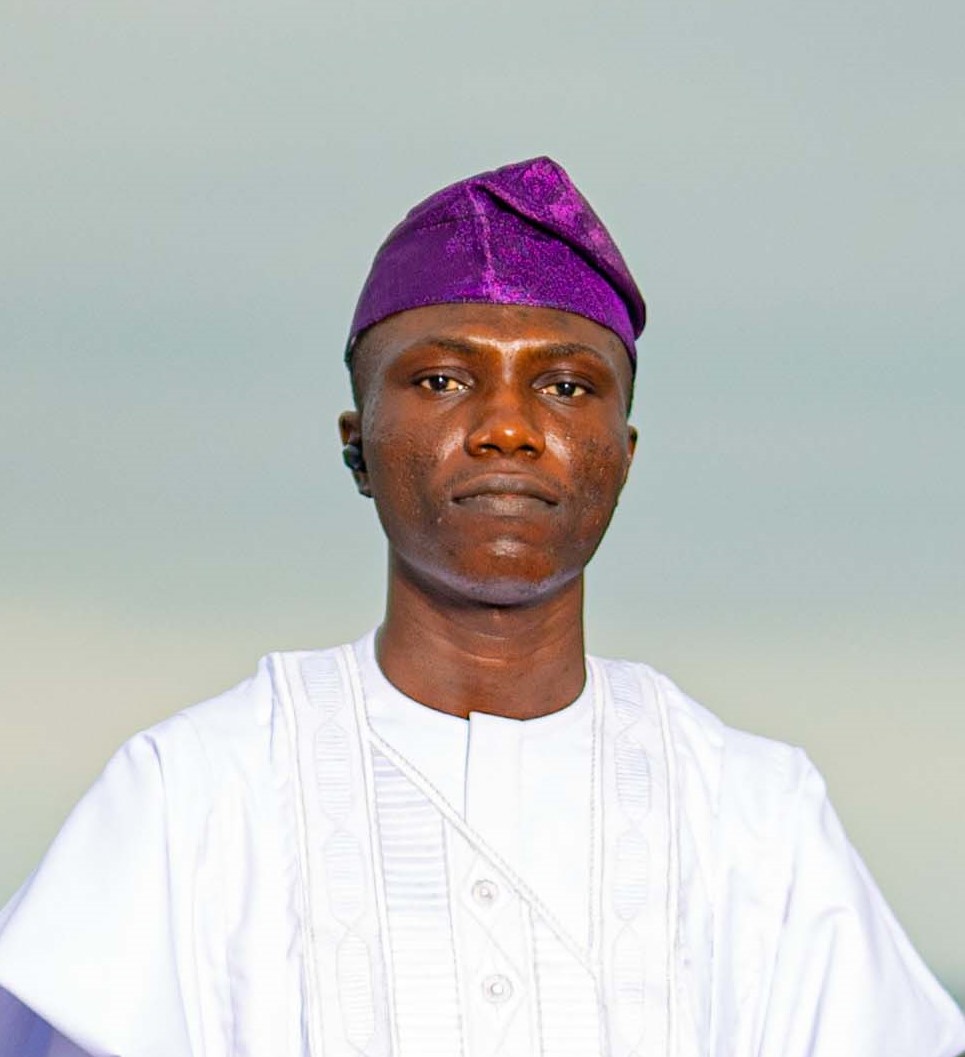
Mujeeb [Jummah] is the founder and editor of TheACE (The African Comics & Cinematic Empire), a media platform documenting Africa's comic and animation industry. A University of Ibadan graduate based in Lagos, he has led branding for events including Comic Con Ibadan.
Related: From Teammate to Boss: The First-Time Manager's 90-Day Playbook (Africa Edition, 2026)